2026 How to Choose the Right Precision CNC Drilling Machine?
In recent years, the demand for Precision CNC Drilling Machines has surged in various industries. According to a report by MarketsandMarkets, the global CNC machine market is projected to reach $117.5 billion by 2025, growing at a CAGR of 7.5%. This growth highlights the importance of selecting the right equipment for achieving optimal results. Precision drilling machines play a crucial role in manufacturing processes. They ensure accuracy, efficiency, and improved production rates.
Choosing the right Precision CNC Drilling Machine is not as straightforward as it seems. Many manufacturers face challenges in identifying machines that meet their specific needs. Factors such as spindle speed, tool compatibility, and operational flexibility must be considered. A machine that excels in one area may underperform in another. Users must reflect on their unique requirements and be aware of possible trade-offs.
Investing in a Precision CNC Drilling Machine should not be rushed. The wrong choice can lead to inefficiencies and increased operational costs. As the industry continues to evolve, staying informed about technological advancements is essential. Evaluating the right machine involves understanding one's production goals and the capabilities of the equipment available.
Understanding Precision CNC Drilling Machines and Their Advantages
Precision CNC drilling machines play a crucial role in modern manufacturing. They deliver high accuracy and consistency, essential for intricate projects. These machines can drill various materials, from aluminum to titanium, meeting diverse needs. Many manufacturers prefer them for speed and efficiency. The automation reduces manual labor, but it can also lead to over-reliance on technology. A flawed setup may result in costly errors.
Understanding these machines helps users make informed choices. Factors like spindle speed, feed rate, and torque significantly affect performance. A machine with adjustable parameters may be more flexible but can also overwhelm inexperienced operators. Finding a balance is critical.
Regular maintenance is vital for longevity and performance. Neglecting machine care may lead to unexpected downtimes. Not every facility has the staff for comprehensive training. Thus, developer-friendliness becomes essential. Navigating through features without support can be frustrating. Recognizing these nuances is key to selecting the right equipment.
Key Factors to Consider When Choosing a CNC Drilling Machine
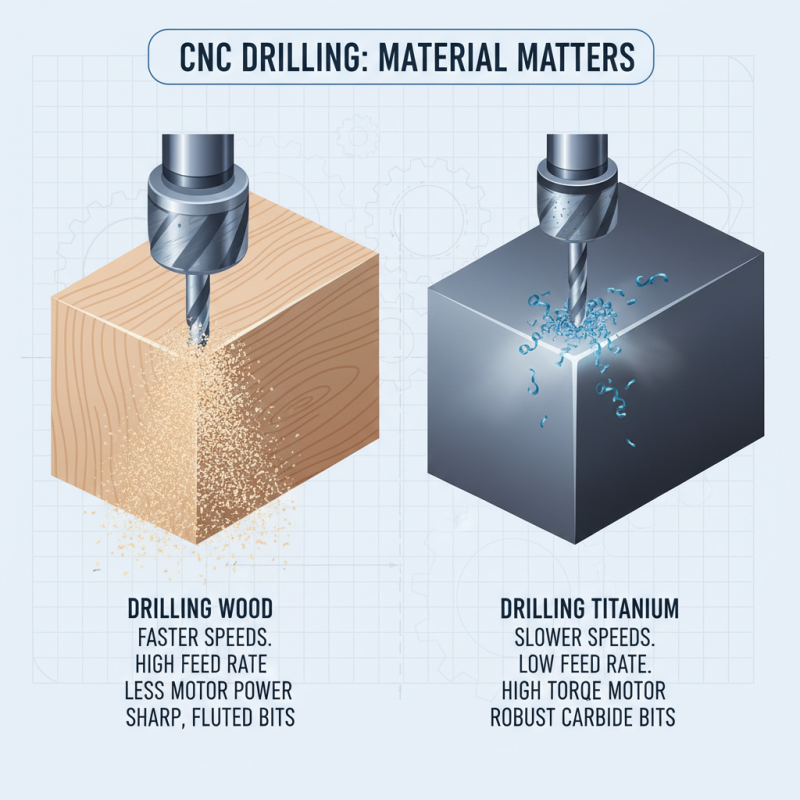
Choosing the right CNC drilling machine involves several key factors. First, understand the material you will be working with. Different materials require different cutting speeds and tool types. For instance, aluminum needs faster speeds, while steel requires slower rates. This affects your machine’s motor power and spindle capability.
Precision is crucial. Consider the tolerance levels that your projects demand. A machine capable of 0.01 mm accuracy may be essential for intricate designs. Examine its rigidity and stability, as vibrations can lead to errors. Also, look at the tooling options available. Some machines may not support various tools, limiting your future work.
Don’t forget usability. An intuitive interface can save time and reduce mistakes. Reflect on your team’s skills too. A complex machine might be underutilized if your operators aren’t trained. Budget constraints are always a consideration. Balance features against costs. Sometimes a lower-cost machine with fewer features makes more sense. Keep these aspects in mind to make a well-informed decision.
Types of CNC Drilling Machines: Which One Suits Your Needs?
When selecting a CNC drilling machine, understanding the types available is crucial. There are primarily three categories: vertical, horizontal, and multi-spindle. Each type serves different applications. According to industry reports, vertical CNC drilling machines account for 50% of the market due to their versatility in handling various materials.
Vertical CNC machines excel at precise drilling tasks but may face limitations with thicker materials. Horizontal machines, while less common, are suitable for heavy-duty operations and multitasking. Multi-spindle machines are ideal for high-volume production, but they require significant investment. This makes them less accessible for small-scale operations.
Tips for choosing the right machine: Identify your material types and thickness beforehand. This will help you determine the best fit. Consider the production volume you expect. If you're aiming for high output, multi-spindle may be worth the investment. Reflect on your budget, as high-end models can significantly raise initial costs. Always ensure that the machine you select aligns with your long-term business goals and production capabilities.
Evaluating CNC Drilling Machine Specifications and Features
When selecting a CNC drilling machine, examining specifications and features is crucial.
Focus on the machine's drilling capacity.
Understand the range of materials it can work with. Different machines have distinct strength levels.
Some may handle metals well, while others excel with plastics or composites.
This choice impacts your production efficiency.
Pay attention to the machine's speed and accuracy. Some machines operate quickly but may compromise precision.
Consider your projects' needs. Are high speeds necessary? Sometimes, a slower, more precise drill is better.
Adjust your selection based on what you prioritize: speed or accuracy.
Look into the features offered. Automatic tool changers can save time.
User-friendly interfaces enhance operation ease. But assess if these features add real value.
Don’t be swayed by high-tech jargon. Sometimes, simpler machines perform adequately for basic tasks.
It’s essential to reflect on what you genuinely require before making a decision.
Budgeting and Cost Considerations for CNC Drilling Machines
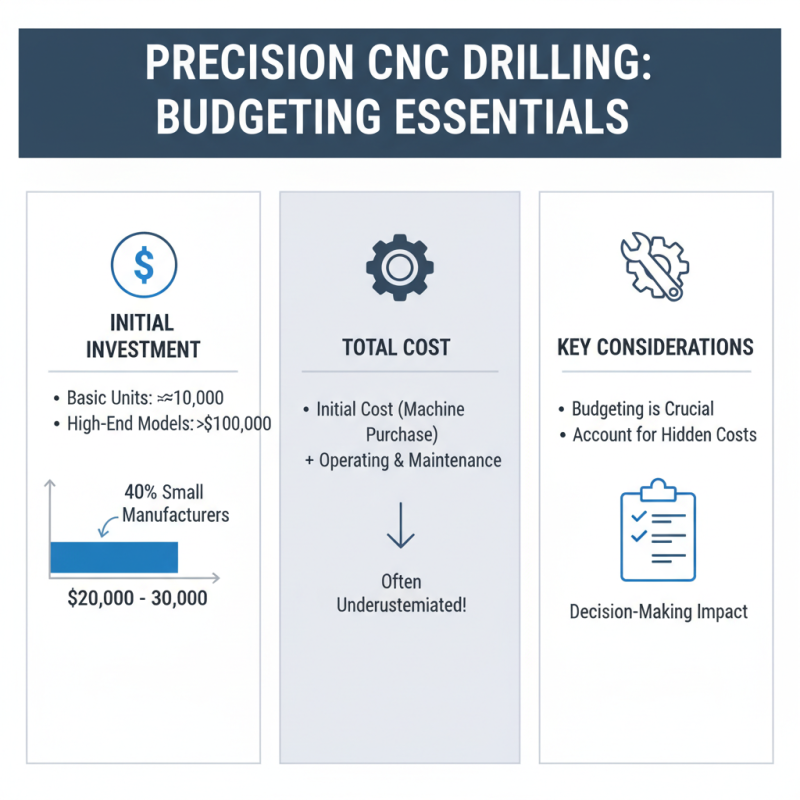
When selecting a precision CNC drilling machine, budgeting is crucial. The initial cost varies widely. Basic units can start around $10,000, while high-end models may exceed $100,000. This variability significantly impacts decision-making for businesses. A recent industry report indicated that nearly 40% of small manufacturers allocate $20,000 to $30,000 for CNC machines. Many underestimate additional costs that arise during operation and maintenance.
Operating costs also play a vital role. Maintenance can average 5-10% of the machine's purchase price annually. Neglecting this can lead to greater expenses in the long run. Power consumption is another hidden expense. A typical CNC drilling machine can consume between 5-15 kW per hour. This translates to approximately $1,500 annually in energy costs alone, based on average rates.
While features and precision matter, executives should not lose sight of the total cost of ownership. It’s easy to overlook ongoing costs when focused on purchase price. The combination of equipment cost, maintenance, and operation can double your investment over time. Some companies find themselves surprised by the cumulative costs and must rethink their budgets. Adjusting your financial plan to consider all factors is essential for long-term success in CNC machining.
 +86 13630122007

 CONTACT YIYAN
 CONTACT YIYAN