Top Precision Cnc Drilling Machine Features and Benefits Explained
In the world of manufacturing, efficiency and precision stand out as paramount qualities. The Precision CNC Drilling Machine embodies these traits exceptionally well. Its advanced technology allows for highly accurate drilling processes, which are essential in industries such as aerospace and automotive. Users often report significant improvements in production speed and reduced material waste when utilizing this machinery.
Beyond its impressive capabilities, understanding the features and benefits of a Precision CNC Drilling Machine is crucial for making informed decisions. Many operators find themselves overwhelmed by options, leading to challenges in selecting the right equipment. Key features, including automated controls and adaptability to various materials, can greatly influence performance. Yet, these machines also require a reliable power source and regular maintenance, often overlooked in discussions.
Evaluating both advantages and limitations helps organizations optimize operations. Precision is not just about drilling holes; it’s about ensuring every detail meets stringent specifications. While many celebrate the success stories, a critical look reveals areas for improvement. Balancing technology with human expertise remains a challenge, making it vital to continuously assess how to utilize these machines most effectively.
Overview of CNC Drilling Machines and Their Significance
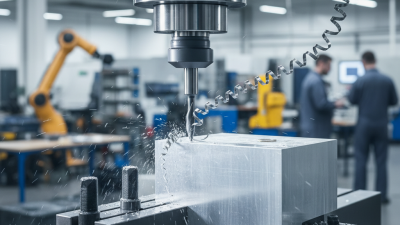
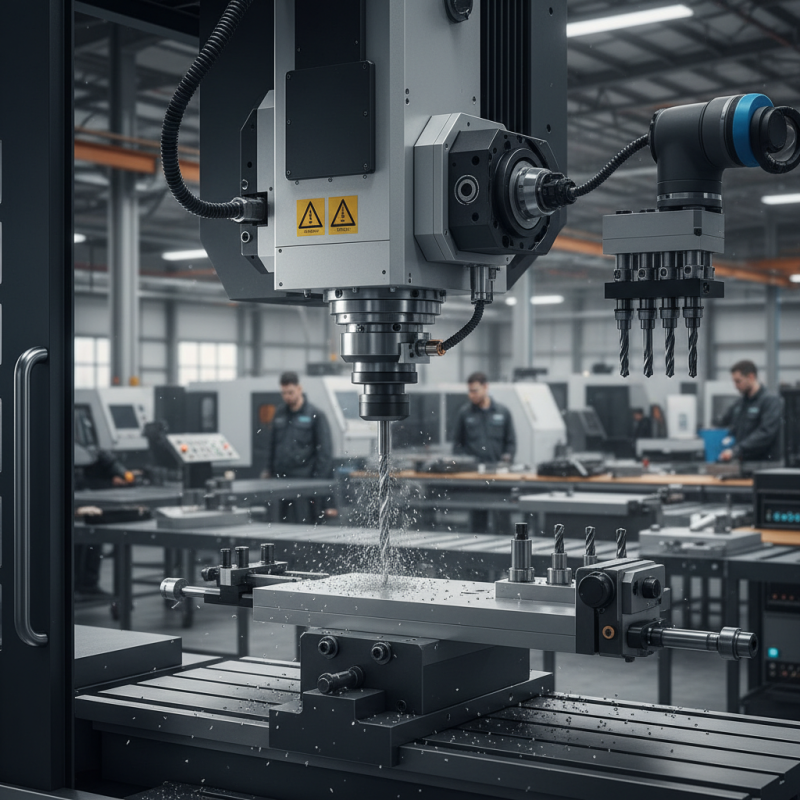
CNC drilling machines are essential in various manufacturing processes. They provide precision and automation, which reduces human error. These machines utilize computer programming to control the drilling process, making them efficient and reliable. Their significance lies in their ability to work with various materials, including metal, wood, and plastics. This flexibility enhances production capabilities significantly.
One notable feature of CNC drilling machines is their ability to create complex shapes. The machine can execute intricate designs with high accuracy. This capability leads to better quality products. However, it is important to consider maintenance needs. Regular checks are crucial to keep machines running smoothly. Neglecting this can lead to operational issues.
When choosing a CNC drilling machine, prioritize features such as spindle speed and tool change capabilities. High spindle speeds improve efficiency. Quick tool changes minimize downtime during operations, allowing for better productivity. Also, ensure that your team receives proper training. Mistakes can occur without the right knowledge. Familiarity with the machine can prevent costly errors and improve overall output.
Key Features of Precision CNC Drilling Machines Explained
Precision CNC drilling machines are essential in various industries, thanks to their unique features. One of the key attributes is their exceptional accuracy. These machines can achieve tight tolerances, producing holes that meet specific dimensions consistently. This precision minimizes material waste and reduces the need for further machining.
Additionally, advanced control systems enhance programming capabilities. Operators can input complex designs easily, allowing the machine to carry out detailed drilling patterns. With intuitive interfaces, users can navigate controls quickly. However, mastering these systems can require a learning curve. Training for staff is necessary, as mistakes can lead to costly errors.
The efficiency of CNC drilling is notable. High-speed operations allow for increased production rates. However, this speed can sometimes compromise the quality of the finished product. Regular maintenance is crucial to avoid issues like tool wear. Keeping machines in top condition ensures that they operate reliably, making it essential for facilities to adopt proactive maintenance practices.
Benefits of Using Precision CNC Drilling Machines in Manufacturing
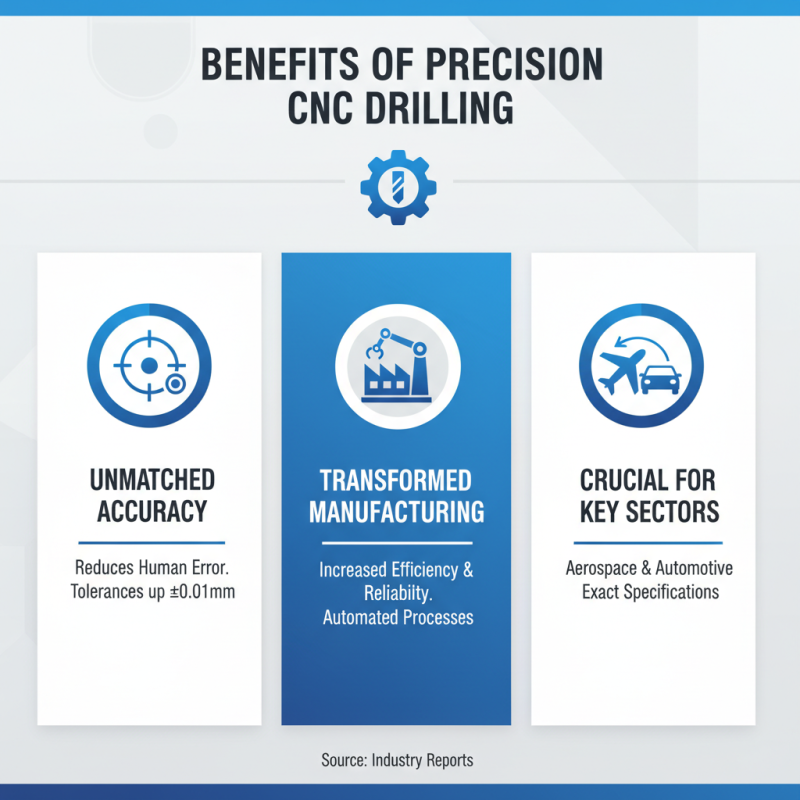
Precision CNC drilling machines have transformed the manufacturing landscape. These machines offer unmatched accuracy, reducing human error. According to industry reports, CNC machines can achieve tolerances as tight as ±0.01mm. This level of precision is crucial in sectors like aerospace and automotive, where exact specifications are vital for safety and performance.
The benefits extend beyond accuracy. Speed is another significant advantage. CNC drilling machines can operate continuously, increasing production rates. A case study noted a 30% increase in output when switching to CNC methods. Additionally, these machines enable complex geometries that traditional drilling methods struggle with. They can produce intricate designs that maximize resource efficiency while minimizing waste.
However, reliance on technology isn't without challenges. Initial setup costs can be substantial. Manufacturers must weigh their investment against projected returns. Training personnel to operate these advanced machines requires time and resources. Continuous improvements in technology may render some aspects outdated. Manufacturers must remain adaptable and seek ongoing training to stay competitive. Embracing precision CNC drilling is a journey that demands careful attention and planning.
Applications and Industries That Rely on CNC Drilling Technologies
CNC drilling technologies have become vital across various industries. These machines excel in precision and efficiency, making them suitable for aerospace, automotive, and electronics. In the aerospace sector, for instance, components require tight tolerances. CNC drilling ensures that each hole meets specific design requirements. The automotive industry benefits from the machines’ ability to handle complex shapes, improving productivity.
Electronics manufacturing is another area that relies heavily on CNC drilling. Here, intricate circuit boards are drilled with precision to ensure functionality. Any miscalculation can lead to malfunctioning devices. This dependence on accuracy highlights the need for reliable drilling solutions. Additionally, CNC drilling aids in prototyping, allowing for rapid design iterations. This can be a game-changer for companies striving for innovation.
Despite these advancements, there remain challenges. Not all materials are compatible with CNC drilling. Some harder materials may wear out tools quickly, affecting production. Moreover, implementing CNC technology requires skilled operators. Training is crucial for maximizing the benefits of these systems. Balancing technology and human expertise is essential for success in these industries.
Comparative Analysis: CNC vs. Conventional Drilling Machines
CNC drilling machines have transformed the manufacturing landscape. They offer precision unmatched by conventional drilling methods. A recent report indicates that CNC machines can achieve tolerances up to ±0.005 mm. This level of accuracy is vital for industries like aerospace and medical manufacturing.
In contrast, conventional drilling machines rely heavily on operator skill. The process often involves manual adjustments and can lead to inconsistencies. According to a 2022 study, about 30% of conventional drilling setups suffer from human error. This can result in significant material waste and increased production costs. Operators may need to spend hours on setups, making CNC machines a more efficient choice.
Furthermore, CNC machines operate continuously, allowing for higher output. They can run 24/7 with minimal supervision. However, this comes with a steep initial investment for equipment and training. Companies should carefully weigh these costs against the long-term benefits. This consideration is crucial for making an informed decision about their drilling processes.
Top Precision CNC Drilling Machine Features and Benefits Explained
| Feature |
CNC Drilling Machines |
Conventional Drilling Machines |
| Automation |
Fully automated with programmable control |
Manual operation requiring human intervention |
| Precision |
High precision and repeatability (±0.01 mm) |
Lower precision and prone to human error |
| Speed |
Faster production cycle time |
Slower due to manual adjustments |
| Setup Time |
Minimal setup time with presets |
Longer setup time for tool changes |
| Material Versatility |
Can handle various materials with ease |
Limited to specific materials based on tooling |
| Cost |
Higher initial investment but lower operating costs |
Lower upfront cost but higher long-term costs |
| User Skill Requirement |
Requires specialized training for programming |
Easier for unskilled workers to operate |
 +86 13630122007

 CONTACT YIYAN
 CONTACT YIYAN