Top Spindle Motor Types for Your Next Project What You Need to Know?
Choosing the right spindle motor is crucial for your project's success. Spindle motors drive the cutting tools in CNC machines and other manufacturing equipment. Understanding the types of spindle motors available will help you make informed decisions.
Different spindle motors offer various benefits. Some provide high speed, while others focus on torque. Consider the application's specific requirements to select the ideal motor. It’s essential to evaluate the cooling systems, power ratings, and maintenance needs as well.
However, determining the best spindle motor isn't always straightforward. Errors in selection can lead to poor performance and higher costs. Researching well and consulting experts can minimize potential mistakes. Pay attention to the specifications and reviews of each motor type. The right spindle motor can significantly enhance your productivity and project outcomes.
Understanding Spindle Motors and Their Applications
Spindle motors play a crucial role in various
industrial applications. These motors are primarily used in CNC machines,
lathes, and milling equipment. They provide precise rotational control, essential for manufacturing processes.
Understanding different spindle motor types is vital for selecting the right one for your project.
There are several variations of spindle motors, including synchronous
and asynchronous types. Synchronous motors offer higher efficiency,
while asynchronous motors are often easier to maintain. Each type comes with distinct advantages and disadvantages.
Choosing the right spindle motor involves assessing your specific needs. Certain applications may
require higher speeds or torque, impacting motor selection.
As technology evolves, innovations emerge in spindle motor design. However, seeking expert advice can help
avoid common pitfalls. Researching capabilities and limitations is essential. High-performance demands might
necessitate custom solutions, leading to potential cost increases.
Balancing performance with budget constraints is often a challenge. Making informed decisions ensures efficiency
and reliability in your projects.
Key Characteristics of Different Types of Spindle Motors
When selecting a spindle motor for your project, understanding its key characteristics is crucial. Spindle motors can be classified into various types, including AC and DC motors. AC spindle motors often excel in applications requiring high torque and consistency. Data shows that over 60% of manufacturers favor these for CNC machining due to their reliability.
DC motors, on the other hand, can provide variable speed control. They are often preferred for applications needing rapid acceleration or deceleration. Reports indicate that about 40% of smaller enterprises opt for DC motors to achieve flexibility in their systems. However, users should consider potential drawbacks such as maintenance and operational wear.
Size and cooling method are also critical factors. Many spindle motors are air-cooled, but water-cooled options can offer better thermal performance. Statistics reveal that water-cooled models can maintain temperatures 30% lower than their air-cooled counterparts. This difference can profoundly affect motor longevity and performance in high-demand settings. Choosing the right type involves weighing these characteristics against your specific project needs.
Comparative Analysis of AC vs. DC Spindle Motors
When choosing spindle motors for your project, a key consideration is the type of power supply:
AC or DC.
AC spindle motors are known for their
robustness and reliability.
They typically require less maintenance, which can reduce downtime in industrial settings. According to a report by
Industry Research, AC motors account for approximately 70% of the global market share.
Their efficiency ratings often exceed 90%, making them suitable for high-demand applications.
In contrast, DC spindle motors offer precise speed control and high torque at low speeds.
They are ideal for applications that need
fine adjustments and responsiveness. However, they may require more upkeep due to brush wear. Recent studies indicate that while DC motors make up about
30% of the market, their usage in specific sectors, like CNC machining, is rising.
It's crucial to weigh the benefits against the limitations, such as the potential for increased maintenance.
Both types have their merits.
AC motors shine in applications demanding durability and lower operational costs.
Meanwhile, DC motors excel when precision control is paramount.
It’s essential to evaluate the specific needs of your project to make an informed decision.
Understanding these differences can help avoid costly mistakes and enhance productivity.
Selecting the Right Spindle Motor for Your Project Needs
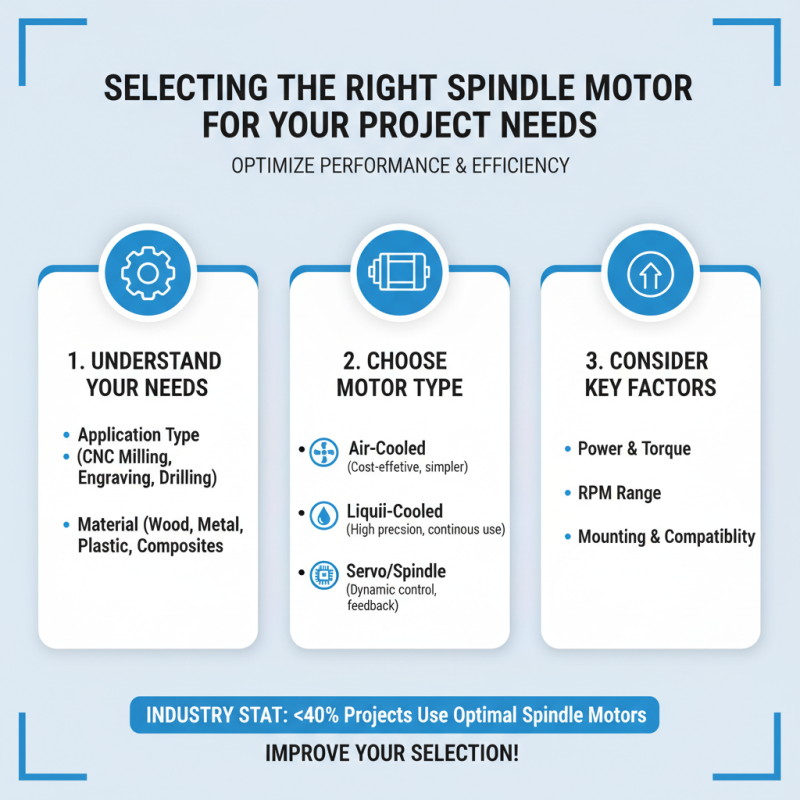
Choosing the right spindle motor is crucial for the success of your project. Different applications demand specific spindle motor types, so understanding these needs is essential. According to industry reports, less than 40% of projects use optimal spindle motors. This shows room for improvement in motor selection.
Spindle motors vary in design and specifications. High-speed motors excel in precision machining, while torque motors suit heavy-duty operations. A report by the International Journal of Advanced Manufacturing Technology indicates that incorrect motor choice can result in efficiency drops of 20% or more. Such inefficiencies lead to increased downtime and higher operational costs.
When selecting a spindle motor, consider power ratings, RPM, and intended use. These factors directly affect performance. Keep in mind that some applications may require a balance between speed and torque. Miscalculating this balance can lead to overworking the motor, shortening its lifespan by up to 30%. Choosing wisely means utilizing resources effectively while minimizing potential failures.
Maintenance Tips for Longevity of Spindle Motors
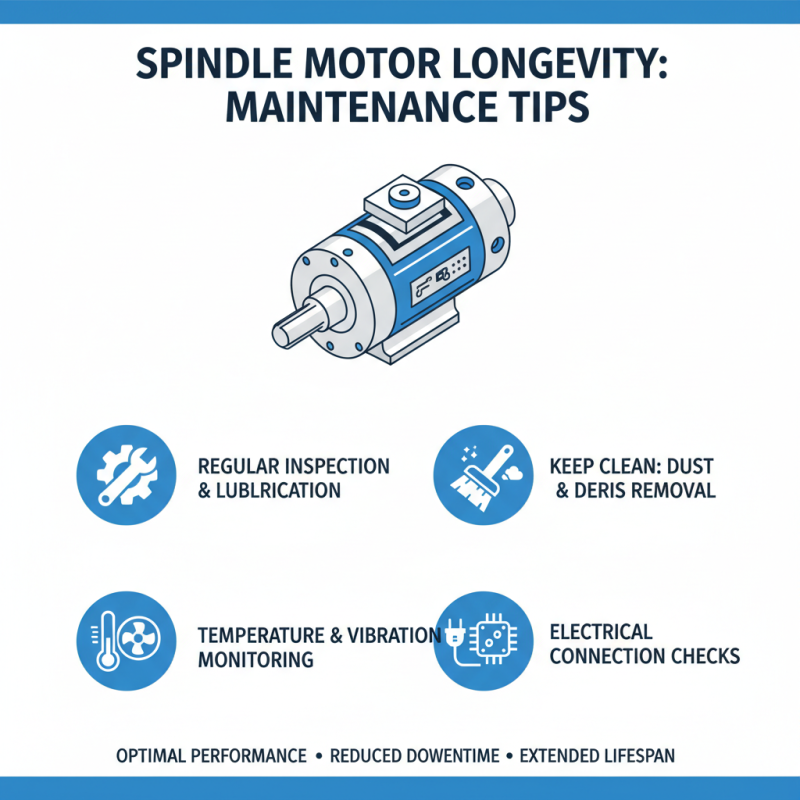
Spindle motors are crucial for various applications, from CNC machines to 3D printers. They require proper care to ensure optimal performance and longevity. Regular maintenance can prevent costly downtime and extend the life of the motor. Not all maintenance routines are created equal. It's essential to understand specific needs based on the motor type.
Keeping the spindle motor clean is vital. Accumulated dust and debris can lead to overheating. Use a soft brush or compressed air to remove buildup. Additionally, checking the lubrication levels regularly can prevent premature wear. If the motor makes unusual noises, it might be time for a closer inspection. This commonly indicates a need for repair or replacement of components.
Heat is another enemy. Ensure the motor has sufficient cooling, especially during prolonged use. It’s easy to overlook heat management. Yet, overheating can drastically reduce its lifespan. For precision tasks, ensure alignment and balance are consistently monitored. This attention to detail can make a significant difference. Reflecting on these aspects can lead to better performance and reliability in your projects.
 +86 13630122007

 CONTACT YIYAN
 CONTACT YIYAN