+86 13630122007


China’s servo actuator industry has moved from basic component assembly toward precise, connected, and application-focused motion systems. This article examines the China Top 10 Servo Actuator Manufacturers, with attention to engineering capability, product consistency, factory scale, and after-sales support. It also considers whether each supplier can maintain stable torque, position accuracy, and thermal performance during demanding cycles.
Servo Actuators are no longer judged only by peak force or compact dimensions. A packaging line may need rapid starts and stops, while a robotic joint requires quiet movement and controlled feedback. These details expose differences that product brochures often hide. As robotics expert Dr. Peter Corke has noted, “Robotics is about sensing, acting, and reasoning in the physical world.” His observation helps explain why encoder quality, control software, and mechanical design must be evaluated together.
The ranking should not be treated as an absolute verdict. Prices, export services, testing standards, and customization ability can change by project and market. Some manufacturers have strong factory resources but limited international support. Others offer flexible engineering but smaller production capacity. That distinction matters.
This overview therefore combines public company information, product evidence, industry experience, and practical buyer considerations. It looks at servo actuator manufacturers serving robotics, CNC equipment, medical devices, packaging machinery, and automated production lines. Readers should still verify certifications, sample performance, warranty terms, and delivery records before choosing a supplier. A polished website is not proof. Real motion data matters more.

A servo actuator converts electrical commands into controlled mechanical movement. It can produce rotation, linear travel, or both through a motor, transmission, and feedback device. In a packaging machine, for example, it may move a gripper exactly 120 millimeters, stop, and repeat the motion thousands of times.
The control process is a closed loop. A controller sends a target position, speed, or torque. The motor responds through an amplifier, while an encoder measures the actual movement. The controller then compares both signals and corrects the error within milliseconds. This constant adjustment supports accurate positioning, smooth acceleration, and stable load handling. Good installation still matters. Loose couplings, poor grounding, or excessive heat can reduce performance quickly.
In practical equipment testing, engineers check repeatability under real loads, not only on an empty bench. They measure backlash, response time, noise, temperature, and emergency stopping behavior. Chinese servo actuator manufacturers may offer different motor sizes, control interfaces, sealing levels, and customization services, so specifications need careful comparison. A higher torque rating does not always mean better performance. It can also increase inertia and energy use. The explanation sounds simple, but tuning is rarely simple. A machine may work well at low speed and behave poorly after production accelerates. That detail deserves honest testing.
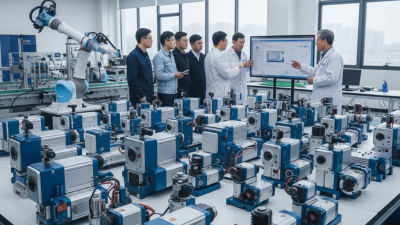
Evaluating China’s top servo actuator manufacturers requires more than comparing catalog prices. The International Federation of Robotics reported 276,288 industrial robot installations in China during 2023, representing about 51% of global installations. This scale creates strong actuator experience, but production volume alone does not prove reliability. A credible evaluation examines torque density, positioning repeatability, response time, thermal stability, and service life under continuous loads.
Factory evidence matters. Buyers should request measured test curves, sampling methods, and failure records, not only laboratory claims. Tests should cover high-cycle motion, sudden load changes, temperature variation, and dust or moisture exposure. Repeatability can be checked against ISO 9283 principles, while enclosure protection should reference IEC 60529 ratings. Safety documentation, traceable components, calibration records, and export compliance also reveal operational maturity. The best manufacturers explain limitations clearly.
Cost remains important, but a lower quotation may conceal shorter bearing life or weaker technical support. MarketsandMarkets identifies automation investment as a major driver of servo-system demand, yet market growth does not guarantee equal engineering quality. A practical scorecard can assign 30% to performance, 25% to reliability, 20% to engineering support, 15% to compliance, and 10% to total ownership cost. The weighting is debatable. Field validation should adjust it. A factory visit, three-month pilot, and independent load testing often expose gaps that brochures miss. Supplier rankings should remain provisional.
China’s top 10 servo actuator manufacturers are increasingly judged by engineering depth, not advertising volume. The country’s automation market is expanding quickly. According to the International Federation of Robotics’ World Robotics 2024 report, China installed 276,288 industrial robots in 2023, representing more than half of global installations. This growth supports strong demand for compact, accurate, and durable servo actuators.
A reliable top-ten comparison should examine rated torque, positioning accuracy, overload capacity, thermal control, and service response. Testing also matters. A suitable actuator should maintain stable movement after repeated cycles, not only perform well in a showroom. Industry reports from MarketsandMarkets identify rising demand for integrated motion systems, especially in electronics, packaging, logistics, and machine tools. Yet published specifications can be incomplete. That deserves scrutiny. Buyers should verify encoder resolution, backlash, IP rating, software compatibility, and warranty conditions directly with manufacturers.
Tips: Request a sample unit and run it under your real load profile. Check noise, heat, vibration, and recovery after emergency stops. Ask for test records, conformity documents, and replacement-part availability. A lower purchase price may hide higher commissioning costs. Field experience also shows that technical support can matter more than a small efficiency difference, particularly when production operates continuously.
The table below provides an anonymized comparison of leading Chinese servo actuator supplier profiles. Technical ranges are indicative and model-dependent; buyers should verify current specifications, certifications, lead times, and after-sales terms directly with each supplier.
| Rank | Supplier Profile | Primary Product Focus | Typical Actuator Configuration | Indicative Power Range | Typical Feedback Options | Common Protection Levels | Key Application Areas | Customization Capability | Export Readiness | Overall Evaluation |
|---|---|---|---|---|---|---|---|---|---|---|
| 1 | Profile A | AC servo systemsIntegrated motion solutions | Rotary servo motor with matched drive | 0.2–15 kW | Incremental encoder, absolute encoder | IP54–IP65 | Industrial automation, packaging, machine tools | High; motor, shaft, cable, and communication options | Strong; multilingual documentation and distributor support | ★★★★★ |
| 2 | Profile B | Precision servo actuatorsMotion modules | Rotary and linear servo actuator assemblies | 0.1–7.5 kW | 17-bit to 23-bit encoder options | IP54–IP65 | Electronics assembly, semiconductor equipment, robotics | High; compact dimensions and application-specific tuning | Strong; supports OEM and international projects | ★★★★★ |
| 3 | Profile C | Servo motorsServo drives | AC permanent-magnet synchronous servo system | 0.4–30 kW | Incremental, absolute, resolver-compatible options | IP54–IP65 | Machine tools, material handling, textile machinery | Medium to high; configurable performance and mounting formats | Strong; established overseas sales channels | ★★★★☆ |
| 4 | Profile D | Linear servo actuatorsElectric cylinders | Ball-screw or belt-driven linear actuator | 0.4–5 kW | Absolute encoder, Hall sensor, limit switch | IP54–IP65 | Assembly lines, medical equipment, dispensing systems | High; stroke, thrust, speed, and mounting customization | Moderate to strong; project-based export capability | ★★★★☆ |
| 5 | Profile E | Heavy-duty servo systemsIndustrial motors | High-torque rotary servo actuator | 1–45 kW | Incremental and absolute encoder options | IP55–IP65 | Press equipment, extruders, conveyors, metalworking | Medium; strong focus on torque and thermal performance | Moderate; technical support varies by region | ★★★★☆ |
| 6 | Profile F | Compact servo motorsSmall automation systems | Low-inertia rotary servo actuator | 0.05–3 kW | Incremental encoder, battery-backed absolute encoder | IP54–IP65 | Labeling, printing, small robotics, inspection equipment | Medium to high; compact mechanical and cable configurations | Moderate; suitable for OEM export orders | ★★★★☆ |
| 7 | Profile G | Robotic servo actuatorsJoint modules | Low-backlash rotary joint actuator | 50 W–5 kW | Absolute encoder, multi-turn encoder | IP54–IP67 | Collaborative robots, AGVs, articulated robots | High; joint size, flange, gearing, and communication options | Moderate; application engineering often required | ★★★★☆ |
| 8 | Profile H | Cost-efficient servo solutionsOEM drives | Standard rotary servo motor and drive package | 0.2–11 kW | Incremental encoder, 17-bit absolute encoder | IP54–IP65 | General automation, conveyors, woodworking equipment | Medium; standard products with selected modifications | Moderate to strong; competitive for volume orders | ★★★☆☆ |
| 9 | Profile I | Integrated servo actuatorsEthernet-based motion | Motor-drive integrated servo actuator | 0.1–4.5 kW | Absolute encoder, encoderless options for selected models | IP54–IP65 | Smart manufacturing, packaging, laboratory automation | Medium to high; network and firmware configuration available | Moderate; export support depends on application | ★★★☆☆ |
| 10 | Profile J | Special-purpose actuatorsCustom motion assemblies | Application-specific rotary or linear actuator | Application-dependent; commonly below 10 kW | Encoder and limit-feedback combinations | IP54–IP67, depending on enclosure | Customized machinery, test systems, special automation | Very high; engineering-led customization | Moderate; quotation and validation normally required | ★★★☆☆ |
Evaluation factors include product coverage, technical flexibility, actuator configuration, protection options, application suitability, customization, and international project support. Rankings are presented as an anonymized market comparison rather than a certification or performance guarantee.
China’s top ten servo actuator manufacturers differ more in engineering focus than in product appearance. Some prioritize high-torque electric actuators for industrial robots, while others develop compact units for packaging, medical equipment, and laboratory systems. Their strongest products usually combine brushless motors, precise encoders, digital feedback, and responsive motion controllers.
In factory testing, performance depends on more than rated force. Engineers should examine repeatability, thermal stability, backlash, noise, and cycle life. A servo actuator may reach impressive peak torque, yet lose accuracy after hours of continuous motion. Some manufacturers offer strong customization, including flange changes, cable options, and software tuning. Others provide better documentation and faster technical support. That difference matters during commissioning. Application fit is critical. A fast actuator suits pick-and-place equipment, while a low-speed, high-load model fits lifting mechanisms. Not every specification sheet tells the whole story.
Tips: Request test data under your real load, speed, duty cycle, and ambient temperature. Check encoder resolution and control compatibility before sampling. Ask how failure analysis is handled. A low purchase price can become expensive when replacement parts, tuning time, and downtime are included. Field experience often exposes weaknesses that laboratory demonstrations hide. I would also question overly perfect claims. Independent validation remains necessary.
Choosing among China’s top 10 servo actuator manufacturers requires more than comparing prices. Buyers should match rated torque, speed, stroke, duty cycle, and installation space with the actual machine. A compact actuator may appear efficient, yet overloading it can create heat, backlash, and early failure. Request drawings, tolerance data, encoder specifications, and protection ratings before approval. A reliable supplier should explain these details clearly.
Do not rely only on a polished catalog. Ask for sample test records, load-cycle results, inspection procedures, and material traceability. A factory audit, whether virtual or on-site, can reveal calibration equipment, assembly cleanliness, and production control. Check whether the supplier can provide consistent samples, not just one impressive unit. Communication also matters. Technical replies should include measurable values, not vague promises. Some buyers overlook after-sales support, then struggle with tuning software or replacement parts.
Tips: Test one actuator under realistic load before placing a large order. Confirm lead times, packaging, warranty limits, and spare-part availability in writing. Ask how failures are analyzed and documented. Compare total operating cost, not purchase price alone. A cheaper unit may require more maintenance. Even experienced buyers can miss small connector differences or mounting errors, so review the final configuration with an independent engineer when possible.