How to Choose a Precision CNC Drilling Machine?
Choosing a Precision Cnc Drilling Machine is not simply a matter of comparing spindle speed or purchase price. The right decision begins with the workpiece, hole tolerance, material, production volume, and available floor space. A machine drilling aluminum panels may struggle with hardened steel components. Small details matter. Review the machine’s positioning accuracy, repeatability, spindle runout, table rigidity, and coolant delivery system. These specifications directly affect hole quality, tool life, and production stability.
Experienced manufacturers also examine control compatibility, automatic tool changing, chip evacuation, and maintenance access. A rigid cast structure can reduce vibration when deep holes are required. High-quality linear guides may support smoother movement over long production cycles. However, impressive specifications do not guarantee suitable performance. Testing sample parts with the intended drill, material, and cutting parameters provides stronger evidence than brochures alone. That assumption can be costly. Certification, service availability, operator training, and spare-part supply also deserve careful attention. A less expensive machine may create hidden costs through setup delays, rejected parts, or difficult repairs.
The best selection balances technical capability with realistic production needs. Buyers should request documented accuracy tests, reference installations, and clear warranty terms. Independent inspection can strengthen confidence before payment. It is also wise to question optimistic claims and identify limitations honestly. No machine is perfect. A reliable Precision Cnc Drilling Machine should deliver consistent results, support safe operation, and remain practical to maintain for years. Good judgment comes from connecting specifications with actual workshop conditions, not choosing the longest feature list.
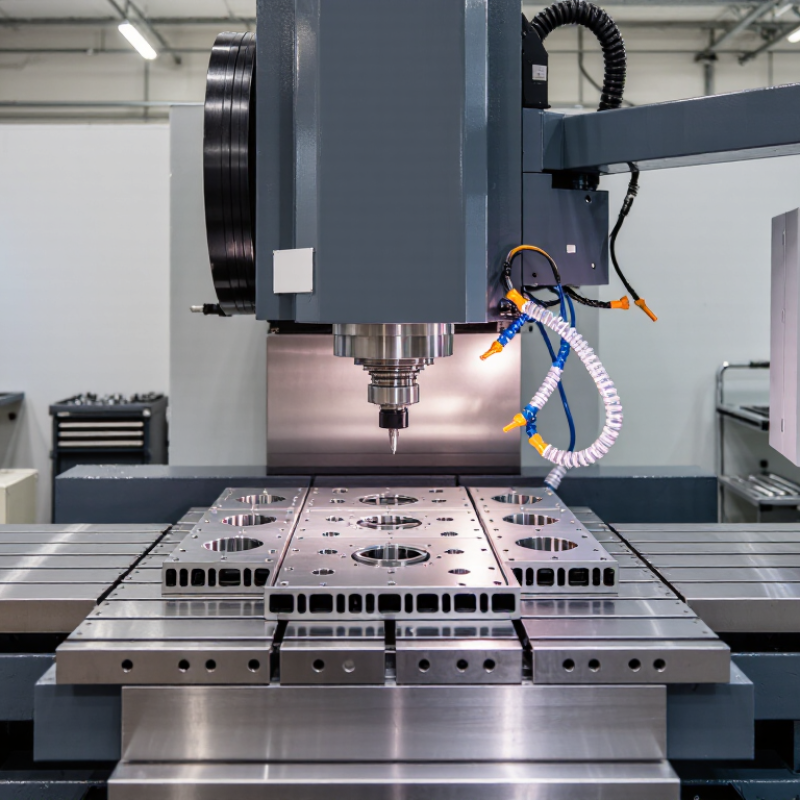
Define the Precision Requirements of Your CNC Drilling Application
How to Choose a Precision CNC Drilling Machine?
Define the Precision Requirements of Your CNC Drilling Application
Precision begins with the hole, not the machine brochure. Specify diameter tolerance, depth, position, perpendicularity, and surface finish for every critical hole. A 10-millimeter hole with a ±0.02-millimeter tolerance needs different control than a general clearance hole. Record the drawing requirements. Do not rely on words like “high precision.”
Separate accuracy from repeatability. Accuracy concerns the commanded position and the actual position. Repeatability concerns whether the machine returns to the same point. Both matter. In production, measure hole centers with a coordinate measuring machine or calibrated vision system. Check several locations across the worktable, not only one convenient corner. Thermal drift can change results during a long shift. Let the machine stabilize, then compare measurements at different times.
Your material and tooling also define the requirement. Hardened steel may need rigid fixturing, controlled cutting data, and coolant management. Thin aluminum can deform when clamped too tightly. I once treated a fixture as “good enough,” then found uneven hole positions near its edge. That was a useful failure, but an avoidable one. Include tool runout, spindle stability, vibration, and inspection intervals in your selection criteria. Ask for documented test results using a workpiece similar to yours. A demonstration with soft material proves very little. Leave a practical tolerance margin, because laboratory conditions rarely survive daily production.
Match Machine Specifications to Material, Hole Size, and Production Volume
How to Choose a Precision CNC Drilling Machine?
Machine selection should begin with the material, not the advertised spindle speed. Aluminum needs high speed and efficient chip removal. Stainless steel demands rigidity, torque, and controlled coolant delivery. Cast iron often requires stable fixturing and careful dust management. I have seen workshops overbuy spindle power while ignoring runout. That mistake still reduces hole quality.
Hole size changes the specification. Small holes require low spindle runout, precise tool holding, and stable feed control. Larger holes need torque, rigidity, and sufficient axis travel. Check positioning accuracy under ISO 230-2 conditions, not only brochure values. For tight tolerances, measure repeatability after thermal warm-up. A cold machine may look perfect. Production volume then determines automation needs. The 2024 World Robotics report recorded 541,302 industrial robot installations worldwide in 2023. High-volume drilling may justify automatic tool changing, pallet systems, and robotic loading. Low-volume work may benefit more from flexible fixturing and quick programming.
Tips: Match spindle torque to the hardest material. Confirm the smallest and largest hole sizes. Request test cuts using your actual alloy and tool. Record cycle time, burr formation, coolant use, and dimensional drift. Do not trust one sample. Repeat it after several hours.
Evaluate Spindle, Feed, Accuracy, and Control System Performance
How to Choose a Precision CNC Drilling Machine?
A precision CNC drilling machine should match your actual materials, hole sizes, and production rhythm. Start with the spindle, not the advertised maximum speed. Check spindle runout, torque across the speed range, and stability during repeated drilling. A high-speed spindle may struggle with deep holes in steel. Ask for test results at your working diameter and cutting speed. Measure under load.
Feed performance shapes both hole quality and tool life. Examine servo response, minimum feed resolution, and motion smoothness at slow speeds. The machine should maintain steady pressure when entering hard material. Rapid acceleration sounds impressive, but controlled movement matters more. I once trusted a fast feed specification and ignored low-speed vibration. That decision produced uneven hole walls and unnecessary tool replacement.
Accuracy requires more than a positioning figure. Review repeatability, backlash compensation, thermal control, and measured results after several hours of operation. Test a sample plate with different hole patterns, then inspect diameter, position, and perpendicularity. The control system should support tool offset management, drilling cycles, probing, alarm history, and clear program editing. Data logging is valuable when a defect appears weeks later. Yet operators still need practical training; an advanced interface cannot correct careless setup. I would also question any specification without test conditions, because temperature, tooling, and material can change the result. A machine that performs well in a quiet showroom may behave differently beside coolant, chips, and continuous production.
How to Choose a Precision CNC Drilling Machine? - Evaluate Spindle, Feed, Accuracy, and Control System Performance
Reference values are typical industrial ranges and should be verified against the machine builder’s test results, workpiece material, tooling system, environmental conditions, and accuracy measurement method. Positioning accuracy and repeatability are commonly evaluated under controlled conditions in accordance with recognized machine-tool testing practices.
Compare Machine Structure, Tooling Options, and Automation Features
How to Choose a Precision CNC Drilling Machine?
Machine structure should be your first practical comparison.
A rigid cast frame reduces vibration during deep-hole drilling. Check the column thickness, guideway design, and spindle support. When the table flexes, even a sharp tool may produce tapered holes. I have seen small alignment errors become serious after several hours of operation. Ask for cutting tests using your actual material, not only showroom samples. A quiet machine is helpful, but measured accuracy matters more.
Tooling options directly affect production flexibility.
Confirm the spindle taper, maximum tool diameter, and available drilling depth. Automatic tool changers save time when one component needs several hole sizes. Coolant delivery also deserves attention. Through-tool coolant can clear chips from narrow holes and protect the cutting edge. However, more options can increase maintenance work. I once selected a machine with advanced tooling features that our operators rarely used. That decision was expensive and poorly planned.
Tips:
Compare repeatability, not only advertised accuracy. Request inspection records for sample parts. Check how quickly tools can be changed by a trained operator. Review chip removal around the table and enclosure. For automation, examine probing, pallet changing, loading access, and software compatibility. A machine may run unattended, yet poor sensor placement can create frequent stoppages. Leave space for maintenance and future upgrades. Your workshop conditions matter. Temperature changes, floor vibration, and operator habits can influence real results.
 +86 13630122007

 CONTACT YIYAN
 CONTACT YIYAN