Leave Your Message

7 Tips for Choosing the Right Servo Actuators?

Choosing the right Servo Actuators can determine whether a machine moves smoothly or struggles under pressure. A small mismatch may cause vibration, overheating, inaccurate positioning, or expensive downtime. The decision deserves more than comparing price tags and advertised speed.

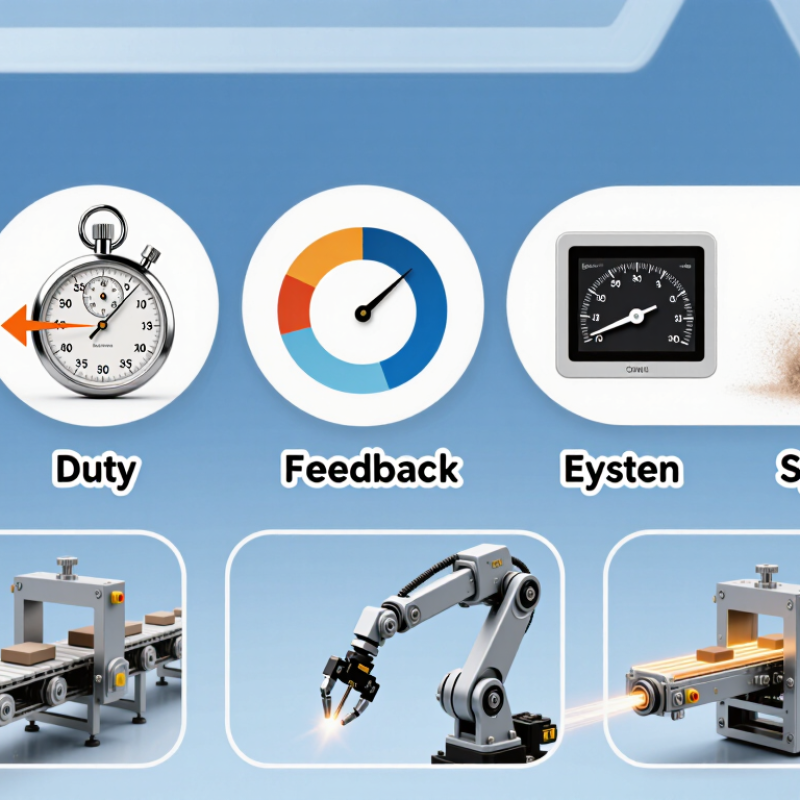
This guide presents seven practical tips for evaluating Servo Actuators in real operating conditions. It considers torque, speed, duty cycle, feedback accuracy, load characteristics, environmental protection, and system compatibility. A factory conveyor, robotic joint, and packaging machine may require very different actuator specifications. Numbers matter.

Experienced engineers usually begin with the load, not the catalog cover. They measure peak force, acceleration, holding torque, and available installation space. They also check how the actuator behaves during repeated cycles, sudden stops, and continuous operation. A unit that performs well in a short test may still fail after hours of heat buildup.

There is no universal “best” actuator. That assumption often leads to poor selections. Manufacturer documentation, verified test data, and application support should guide the final choice. Independent technical review can also expose missing details, especially around backlash, sealing, maintenance, and controller integration. Specifications can look impressive.

The following tips help connect technical requirements with dependable performance. They are useful for new equipment, upgrades, and replacement projects. Some recommendations may need adjustment after testing, because real machines rarely behave exactly like spreadsheets. Careful selection reduces risk and supports safer, more predictable automation.
7 Tips for Choosing the Right Servo Actuators?

Understand Servo Actuator Types and Their Applications

Choosing the Right Servo Actuators starts with understanding their motion types and applications.

A rotary servo actuator suits robotic joints, indexing tables, and valve positioning. A linear servo actuator fits presses, slides, inspection stages, and pick-and-place equipment. Direct-drive designs can reduce backlash, but they often require careful sizing and higher initial investment.

Match the actuator to the real load, not the catalog headline. Check continuous force, peak force, speed, stroke, and acceleration. A voice-coil actuator offers fast, short movements, while a ball-screw actuator provides stronger linear thrust.

For repetitive packaging, calculate duty cycle and heat buildup. For clean laboratory equipment, examine sealing, lubrication, and material compatibility.

Feedback matters. Encoders support accurate position control, while additional sensors can monitor force or temperature. Confirm that the actuator communicates with your controller and supports the required resolution.

Allow margin for friction, cable drag, and unexpected impact. I have seen designs fail because static load calculations ignored acceleration. My first estimate is not always right. Test a representative load before final selection. Dust, vibration, washdown exposure, and ambient temperature also influence the correct servo actuator type. A quieter machine may still need better stiffness, not merely a smaller motor.бжь

Match Torque, Speed, Stroke, and Load Requirements

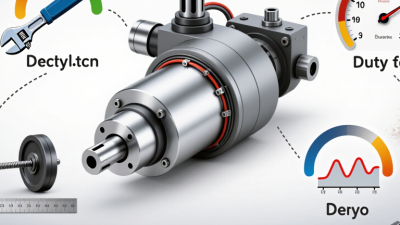
Choosing the right servo actuator starts with the moving load, not the catalog. The International Federation of Robotics reported 541,302 industrial robot installations in 2023. That growth increases demand for precise, efficient motion systems. Measure the actual load, including tooling, cables, and product weight. Then calculate continuous torque, peak torque, acceleration, and external forces. Do not trust peak torque alone. It may last only milliseconds.

Match speed to the motion profile. A fast actuator can still waste time if acceleration is poor. Check rated speed under real torque, not an unloaded test. Stroke must cover the full travel with a small safety margin. Too much extra stroke can increase cost, mass, and bending risk. For vertical axes, include gravity and braking force. For horizontal axes, friction and guide alignment matter more. Load position is critical. A load mounted far from the guide creates a larger moment.

Review duty cycle and heat. The U.S. Department of Energy estimates that motor-driven systems use about 68% of industrial electricity. Efficient sizing can reduce unnecessary energy use. I have seen designs fail because engineers selected a perfect torque value but ignored inertia. That mistake is common. Use the manufacturer’s inertia ratio, thermal curves, and life calculations. Add a practical service factor, but avoid excessive oversizing. It can reduce responsiveness and hide poor calculations. Confirm repeatability, backlash, noise, and environmental protection before approval. A spreadsheet can still lie. Test the actuator with the real payload, travel, and cycle time whenever possible.

Evaluate Precision, Feedback, and Control Features

7 Tips for Choosing the Right Servo Actuators?

Precision starts with the application, not the product brochure. Define the required repeatability, positioning error, speed, and load inertia first. A packaging axis may need fast settling, while a cutting axis needs stable low-speed motion. The International Federation of Robotics reported 541,302 industrial robot installations in 2023. That growth increases pressure on motion systems, but higher speed alone does not guarantee better results.

Inspect the feedback architecture carefully. An encoder mounted on the motor may miss backlash, coupling slip, or screw expansion. A load-side sensor can reveal these errors, although it adds cost and integration work. Check resolution, sampling frequency, noise immunity, and cable routing. More counts do not automatically mean more accuracy. I have seen commissioning teams chase encoder resolution while ignoring machine vibration. That was a costly mistake. Mechanical stiffness still matters.

Control features deserve equal attention. Look for adaptive tuning, feedforward control, torque limits, and safe fault handling. Confirm whether the actuator supports your controller’s communication cycle and synchronization method. Industry surveys often show that manufacturers rank integration difficulty among their major smart-factory barriers; Deloitte’s 2023 smart manufacturing survey also highlights persistent skills and implementation gaps. Test the actuator under real loads, not only unloaded conditions. Measure settling time, temperature rise, overshoot, and repeatability across several cycles. Leave room for doubt. A specification can be correct and still fail your machine.

Check System Compatibility, Installation, and Environmental Ratings

7 Tips for Choosing the Right Servo Actuators?

Check System Compatibility, Installation, and Environmental Ratings

A servo actuator should match the machine, not merely the catalog torque. First, confirm supply voltage, controller protocol, feedback type, and peak current. Second, calculate reflected inertia, acceleration, duty cycle, and holding load. Third, reserve thermal and torque headroom; nominal matches can fail during cold starts.

According to the International Federation of Robotics’ World Robotics 2024 report, factories installed 541,302 industrial robots in 2023. This growth increases pressure for repeatable motion and reliable integration.

Fourth, verify mounting dimensions, shaft geometry, cable exits, and service access before ordering. Measure twice.

During installation, align the load carefully and follow the specified cable bend radius.

Fifth, separate power and feedback wiring, then confirm grounding and shielding. Sixth, test travel limits, braking, homing, and emergency stopping at reduced speed. Do not trust commissioning software alone.

For the environment, seventh, check the IEC 60529 IP code, operating temperature, humidity, vibration, shock, and corrosive exposure. An IP rating is not a complete environmental guarantee.

IEC 60068 test methods can clarify vibration and climatic performance, but the enclosure and cleaning routine still matter. A damaged connector can defeat an otherwise suitable actuator. The gasket may look intact. It may not be.

Compare Reliability, Maintenance, Cost, and Supplier Support

7 Tips for Choosing the Right Servo Actuators

Compare Reliability, Maintenance, Cost, and Supplier Support

Tip 1: Check reliability under real operating conditions. A servo actuator may perform well in a catalog but struggle with heat, dust, vibration, or continuous cycling. Request test data, rated life, and load limits. Then compare those figures with your machine’s actual duty cycle. Tip 2: Inspect maintenance requirements. Look for accessible lubrication points, replaceable seals, diagnostic feedback, and clear service intervals. A few minutes saved during maintenance can prevent hours of downtime.

Tip 3: Calculate total cost, not only purchase price. Include installation, controllers, energy use, spare parts, labor, and expected replacement time. A cheaper actuator may look attractive. I have seen low upfront costs create expensive integration problems later. Tip 4: Confirm performance consistency. Check positioning accuracy, repeatability, speed stability, and behavior during sudden load changes. Ask for application data from similar working environments, not only laboratory results.

Tip 5: Test supplier support before ordering. Ask technical questions and measure response quality. Do they provide drawings, setup guidance, troubleshooting steps, and realistic delivery dates? Tip 6: Review spare-part availability and repair procedures. Support that sounds excellent but lacks parts is not enough. Tip 7: Request a documented acceptance test. It should define noise, backlash, accuracy, and operating temperature. No choice is perfect. Leave room for redesign when field results challenge your assumptions.